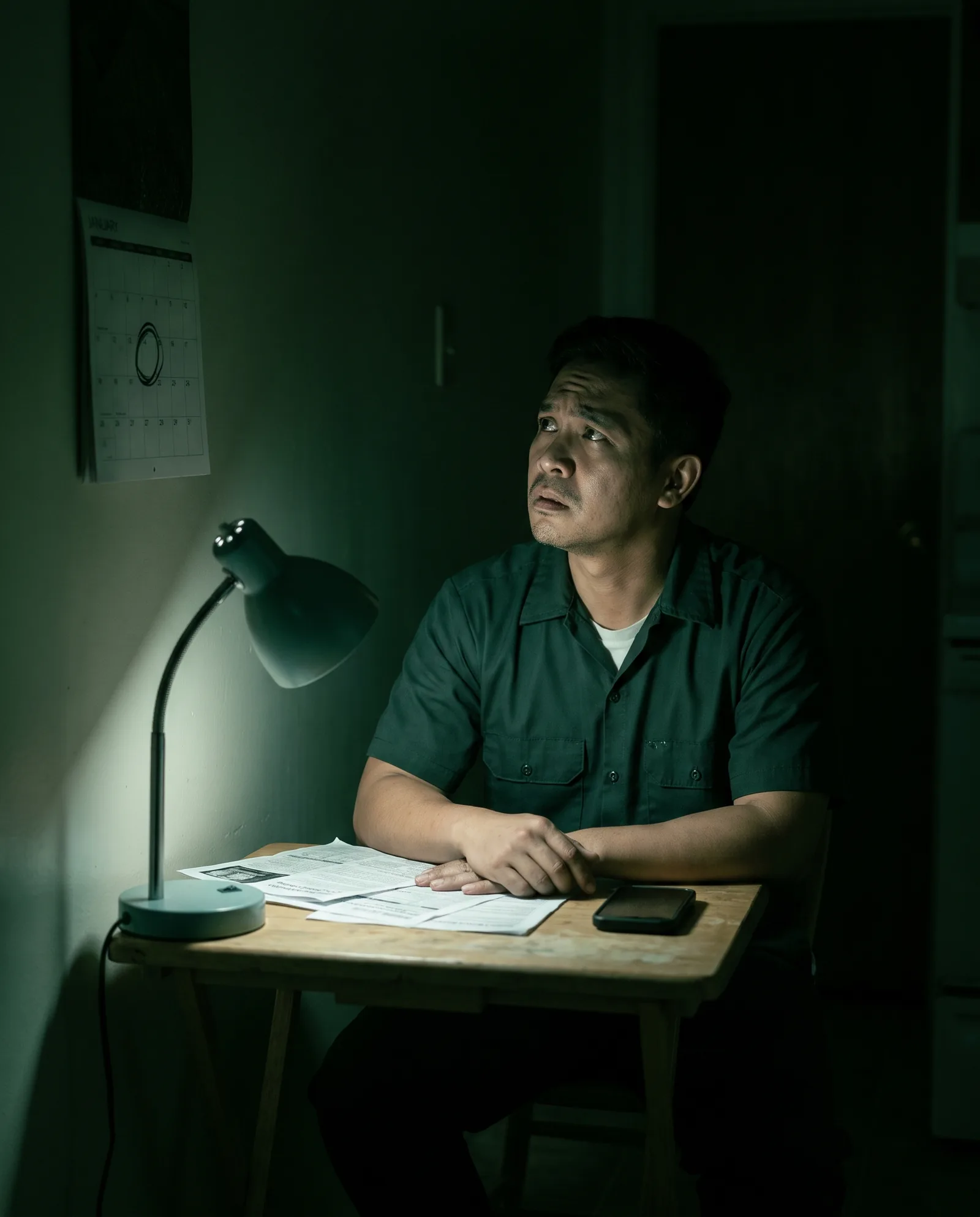
Nothing is decided yet.A lawsuit is a claim, not a verdict. It becomes a judgment only if the court enters one.District Court Rule 55
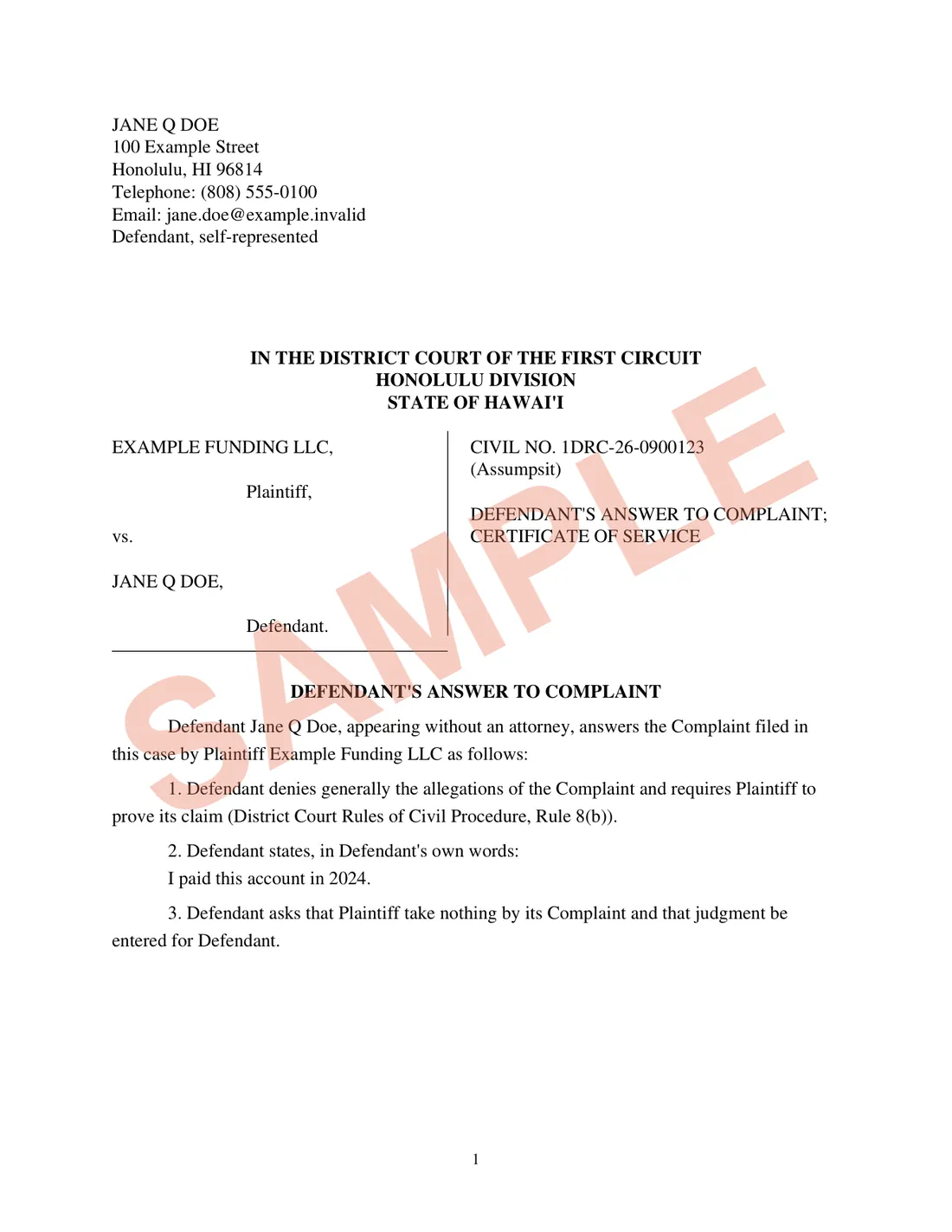
A plain denial is enough to start.In Hawaiʻi District Court a general denial answers the whole complaint — and appearing without a written answer is treated as one.District Court Rule 8(b)
Silence lets a default in.If you neither file a written answer nor appear, a default can be entered and then a judgment for what the complaint asks.Summons · District Court Rule 55
Defenses stay available.A general denial keeps the other defenses the law allows available to you, unless the court orders a written answer.District Court Rule 8(c)
Old debt has a time limit.An action to recover a debt on a contract must be started within six years after it accrued.HRS 657-1(1)
Garnishment has limits.Even after a judgment, Hawaiʻi law limits how much of each paycheck a garnishment can take.HRS 652-1
Some money and property can't be touched.Social Security and veterans' benefits are protected by federal law, and Hawaiʻi exempts household goods, a vehicle up to a limit and the tools of your trade.42 U.S.C. §407 · 38 U.S.C. §5301 · HRS 651-121
Debt collectors have rules too.Federal law bars debt collectors from false statements and threats, and from calls before 8 am or after 9 pm.15 U.S.C. §1692c, e
A default can be set aside.The court may set aside a default for good cause, and a default judgment on a motion made within a reasonable time — for mistake, excusable neglect, new evidence or fraud, not more than one year after it.District Court Rules 55(c), 60(b)
If a debt buyer is suing.The Federal Trade Commission's study of the industry found debt buyers paid about 4 cents per dollar of face value.FTC, 2013
This is information about how Hawaiʻi's rules work, in plain English. It is not advice about what you should do in your case. We prepare the answer you choose to file, in your own words, and we'll tell you when we think a lawyer should look at yours.